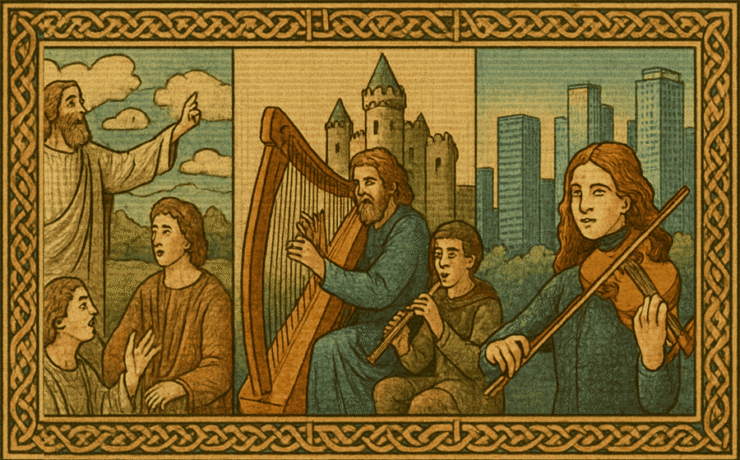
Irish traditional music is often presented as one of Europe’s oldest living musical traditions. It is tempting, therefore, to look back to the Druids and imagine a direct line connecting ancient Celtic ritual to the music played in Irish pubs and sessions today. The historical reality is more complicated—and, in some ways, more interesting.
We cannot reconstruct what druidic music actually sounded like. What we can see, however, is a much older tradition of transmitting knowledge through sound, repetition, rhythm, and performance. Across centuries, Irish music changed its instruments, institutions, audiences, and technologies of transmission. Yet something fundamental remained: music continued to function as a way of carrying memory.
Music Was Not Entertainment – It Was Memory
In an oral society, knowledge has to be remembered before it can be transmitted. This makes the difference between speaking and singing less obvious than it might seem to us today.
Early sources associate Druids with ritual, law, genealogy, and the preservation of knowledge (Rhys 1894; Beltz 2017). We have no reliable recordings—and no detailed musical notation—from which to reconstruct their music. Yet the social function of rhythmic and structured recitation is easier to understand. Knowledge could be organised through metre, repetition, formula, and performance.
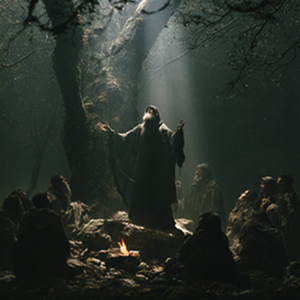
Music, in this sense, was not simply entertainment. It was a mnemonic function through which genealogy, territory, mythology, and social order could be made audible.
The later bardic tradition preserved much of this logic. Bards were not merely musicians in the modern sense. They were custodians of historical memory, attached to courts and aristocratic households and trained to reproduce extensive bodies of material through oral performance. The bardic schools therefore formalised an older principle: knowledge could be stored in the human voice.
The Harp – From an Instrument of Rule to a Symbol of Resistance
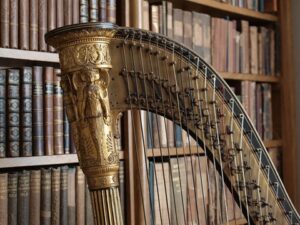
If one instrument embodies the political history of Irish music, it is the harp. In medieval Gaelic society, harpers occupied an important position within aristocratic culture. The harp was associated with courts, rulers, and sovereignty. Its music helped to connect the present ruler with a remembered genealogy and political order (Rimmer 1969; Lanier 1999).
The disappearance of the Gaelic political system therefore had consequences far beyond the loss of aristocratic institutions. The musical world associated with those institutions also began to fragment.
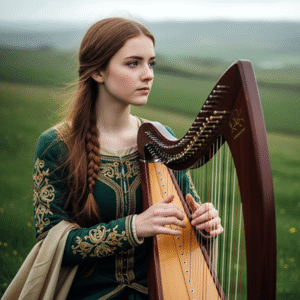
Yet the harp survived—and its meaning changed. What had once been an instrument of rule gradually became a symbol of cultural identity and, eventually, resistance. The paradox is striking: the harp remained politically powerful precisely after the political order that had supported it had largely disappeared.
This transformation illustrates a broader feature of Irish cultural memory. When institutions disappear, symbols can acquire a new life. The harp no longer represented the authority of a Gaelic ruler; it could instead represent the memory of a Gaelic Ireland that political power had failed to preserve.
The instrument thus moved from courtly music into the symbolic language of nationalism. Its survival was no longer simply musical. It had become historical.
The Limits of Writing Things Down
There is another paradox in the history of Irish music. The oral tradition was extraordinarily flexible, but it was also vulnerable. When the social structures that supported it weakened, collectors increasingly attempted to preserve its repertoire in writing.
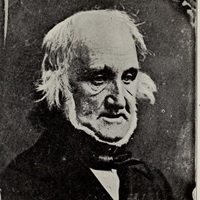
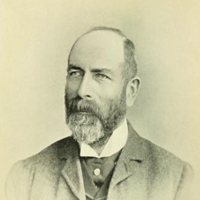
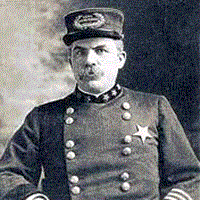
During the nineteenth century, figures such as Edward Bunting, George Petrie, Patrick Weston Joyce, and later Francis O’Neill collected and published large numbers of Irish tunes. Their work rescued an enormous musical inheritance from disappearance.
But the moment a tune is written down, something changes.
Notation can preserve melodic shape. It can tell us which notes follow which. It can give us a basic rhythm. What it cannot easily preserve is the way a particular musician actually played those notes. Ornamentation, phrasing, microtiming, regional accents, and the subtle variations between performers are difficult to reduce to a staff. A Sligo roll or an East Clare slide is not simply another note on a page; it is a physical gesture.
The printed tune therefore becomes a kind of skeleton: recognisable, durable, and transmissible, but detached from some of the embodied knowledge that once gave it life.
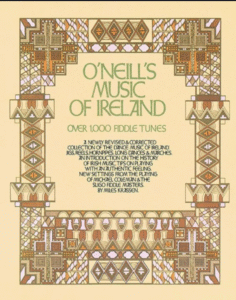
O’Neill’s Music of Ireland (1903) provides a particularly revealing example. Working partly with musicians in the Irish immigrant community in Chicago, O’Neill had to select and standardise material that existed in multiple living versions.
The result was an enormously valuable repertoire—but one in which regional variations and stylistic differences could become less visible. Writing saved Irish music from disappearance while simultaneously changing what was meant by preserving it. The collector did not simply rescue tradition. He also helped to define it.
Irish Music Becomes Its Own Thing
By the twentieth century, Irish traditional music was no longer tied to the institutions that had originally sustained it. It had become something more independent: a repertoire, a practice, and eventually a musical identity that could travel far beyond the social world in which individual tunes had originated.
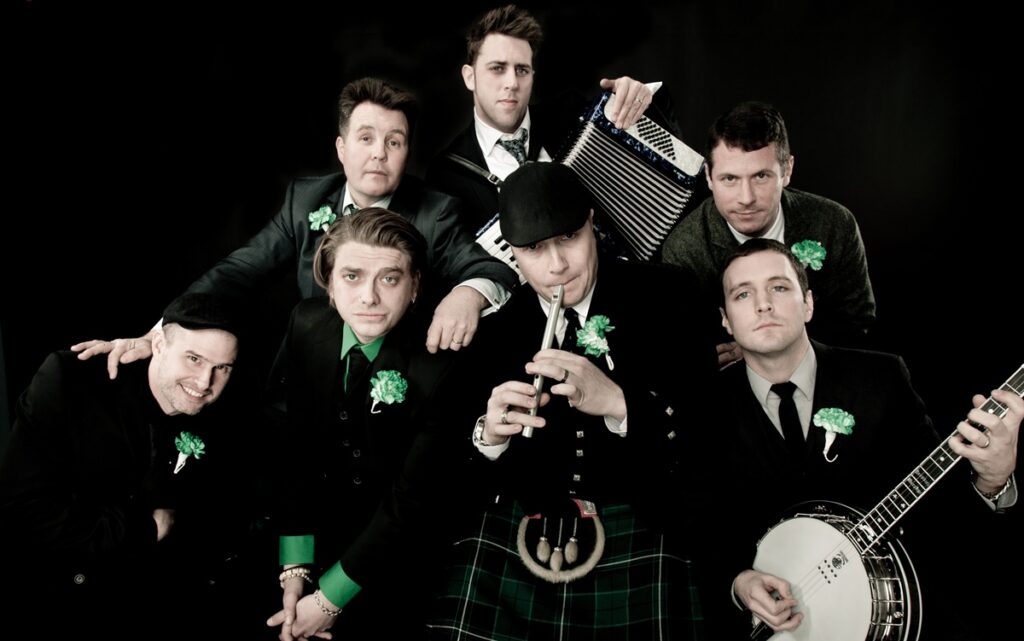
The session is perhaps the clearest expression of this transformation. Music is no longer necessarily attached to a court, a religious ceremony, or a particular political authority. It is played because people know it, because they enjoy playing it, and because playing it together keeps it alive.
This also helps explain why Irish traditional music has proved remarkably successful outside Ireland. Its continuity no longer depends entirely on geography or ancestry. Musicians with no Irish background can learn the repertoire and participate in its transmission (Falc’her-Poyroux 2022).
Digital media have accelerated this process. Recordings, YouTube, and digital archives such as the Irish Traditional Music Archive make thousands of performances accessible to anyone. A musician can now learn a tune from a recording made thousands of kilometres away and decades earlier.
This is both a continuation and a departure from oral tradition. Digital archives preserve versions with a fidelity that earlier collectors could not achieve, but they also detach learning from the community in which musical style was traditionally acquired. The learner now has access to an almost infinite number of versions and must decide which one to follow.
The medium has changed again. But the underlying problem remains surprisingly familiar: how do you preserve music without reducing it to an object?
What Did the Druids Leave Behind?
Probably not a melody that can be traced from ancient ritual to a modern Irish session. There is simply no evidence for such a direct connection. What may have survived is something less tangible: the idea that music can carry memory through changing forms of transmission.
From voice to notation, recordings, and digital archives, each medium preserves something while inevitably losing something else. Irish music has survived not by remaining unchanged, but by reinventing itself. Perhaps that is the most interesting legacy—not a tune or an instrument, but the idea that memory can live in performance.
The music heard in an Irish session today is not Druidic music. But it is still, in its own way, music that remembers.